#Place Branding
#Brand Identity
#Civic Identity
Greater Bengaluru Pradhikara
What does it mean to design for a city, one that is constantly expanding, absorbing, and redefining itself? The project imagines how civic institutions communicate with their people. Moving beyond logos as mere symbols, this identity positions design as a civic tool, one that informs, guides, and represents.
Focus
Urban governance identity
Type
Self Initiated
Submission for ADI
Year
2025

About the project
Building the Face of Bengaluru’s New Governance Framework.
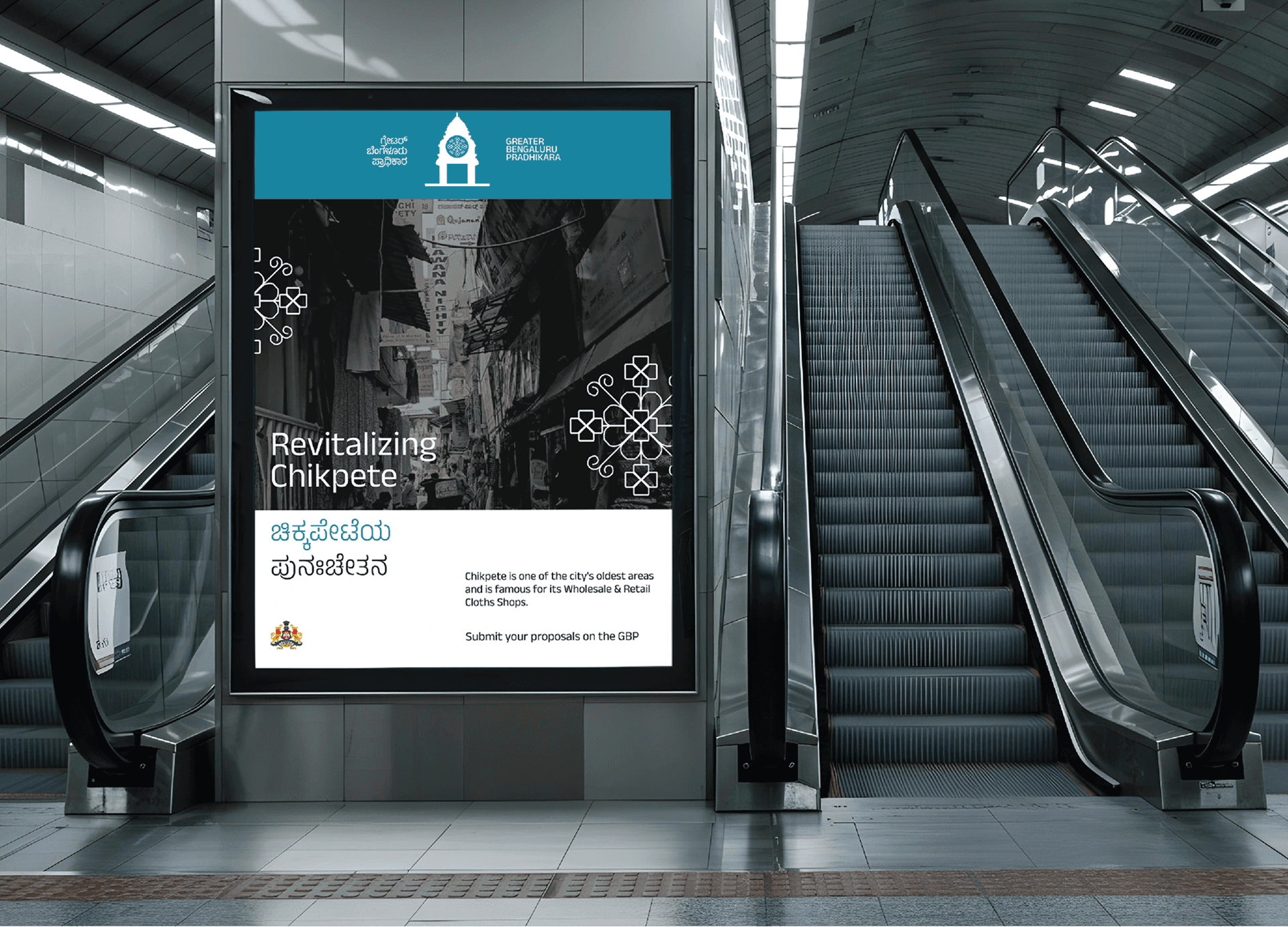
The identity design serves as the visual foundation for a new governance framework aimed at streamlining Bengaluru’s growth and development. As the Greater Bengaluru Pradhikara works toward a more decentralized, participative, and efficient system, the identity needed to reflect clarity, accessibility, and cohesion at a city scale.the country.
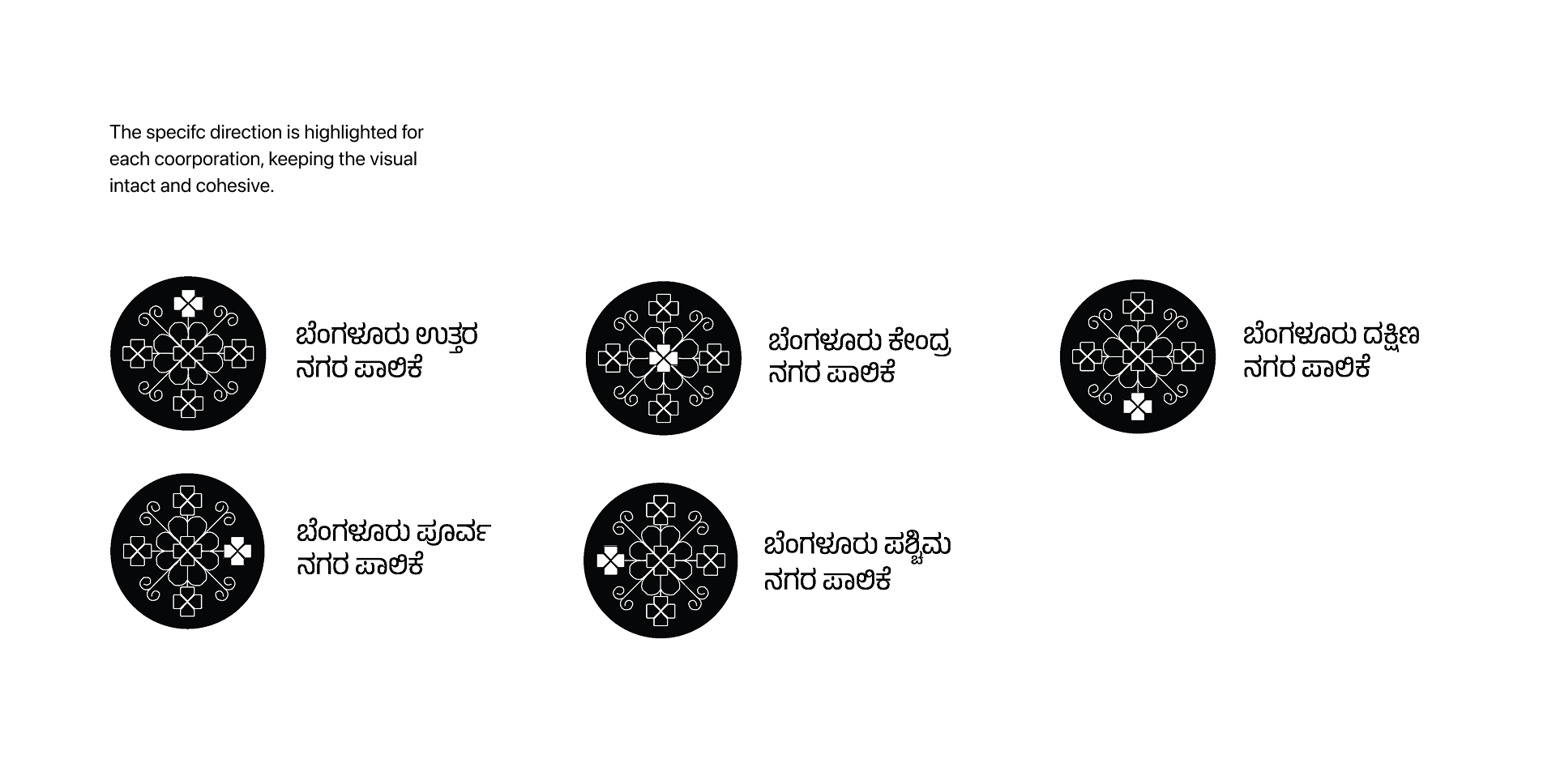
The approach was rooted in Bengaluru itself, drawing from its visual culture, architectural cues, and familiar motifs. It aims to create a visual system that bridges Bengaluru’s cultural heritage with its global aspirations, turning governance into something people can see, understand, and relate to.

Process
The design strategy began by deriving visual motifs from the city itself, forms, emblems, and symbols that hold cultural memory and civic significance.
The process began with auditing existing visual identities of government institutions, identifying patterns in how authority, structure, and communication are currently represented. This was followed by studying Bengaluru’s visual and cultural markers.
Multiple directions were explored, ranging from abstract to literal forms, and from typographic to metaphor-driven approaches. Through iterative exploration, a set of strong directions emerged. The final conceptualization is explained in the below image.




Reflection
This project made me look at the city I’ve grown up in with a sharper lens.
A conscious decision throughout was to avoid generic or imposed visual language. Instead, the identity is rooted in the city itself, shaped by its context, its people, and the spaces it operates within. This grounding ensures the system feels relevant, familiar, and truly reflective of who it serves.
DISCOVER MORE
Want to check more?
Discover other projects.


Focus
Urban governance identity
Type
Self Initiated
Submission for ADI
Year
2025
#Place Branding
#Brand Identity
#Civic Identity
Greater Bengaluru Pradhikara
What does it mean to design for a city, one that is constantly expanding, absorbing, and redefining itself? The project imagines how civic institutions communicate with their people. Moving beyond logos as mere symbols, this identity positions design as a civic tool, one that informs, guides, and represents.
About the project
Building the Face of Bengaluru’s New Governance Framework.
The identity design serves as the visual foundation for a new governance framework aimed at streamlining Bengaluru’s growth and development. As the Greater Bengaluru Pradhikara works toward a more decentralized, participative, and efficient system, the identity needed to reflect clarity, accessibility, and cohesion at a city scale.
The approach was rooted in Bengaluru itself, drawing from its visual culture, architectural cues, and familiar motifs. It aims to create a visual system that bridges Bengaluru’s cultural heritage with its global aspirations, turning governance into something people can see, understand, and relate to.
Process
The design strategy began by deriving visual motifs from the city itself, forms, emblems, and symbols that hold cultural memory and civic significance.
The process began with auditing existing visual identities of government institutions, identifying patterns in how authority, structure, and communication are currently represented. This was followed by studying Bengaluru’s visual and cultural markers.
Multiple directions were explored, ranging from abstract to literal forms, and from typographic to metaphor-driven approaches. Through iterative exploration, a set of strong directions emerged. The final conceptualization is explained in the below image.
Reflection
This project made me look at the city I’ve grown up in with a sharper lens.
A conscious decision throughout was to avoid generic or imposed visual language. Instead, the identity is rooted in the city itself, shaped by its context, its people, and the spaces it operates within. This grounding ensures the system feels relevant, familiar, and truly reflective of who it serves.
DISCOVER MORE
